

Thunderchild Flowering Crab Apple
Thunderchild Flowering Crabapples are an attractive, compact and upright tree that make the perfect focal point for any garden. During middle spring, the branches are draped with clusters of vibrant pink flowers. Its fruit is perfectly edible and tends to remain on the tree long into winter. The tree displays a dark purple foliage throughout the growing season. Thunderchilds are strongly resistant of fire blight. They are an absolute delight for bees, butterflies and birds alike.


| Common Name |
Thunderchild Flowering Crabapple |
|---|---|
| Latin Name |
Malus 'Thunderchild' |
| Form |
Oval |
| Life Span |
50= |
| Growth Rate |
Medium |
| Mature Height |
5.0m |
| Mature Spread |
3.5m |
| Flower Colour |
Pink ,Rosy |
| Fragrance |
Very Fragrant |
| Fall Colour |
Bronzy |
| Soil Preference |
Widely adaptable |
| Exposure Preference |
Full sun |
| Cold Hardiness Zone |
Zone 2b |
| Special Attributes and Considerations |
The Thunderchild is a crabapple tree that will produce small marble sized pomes which can be made into jelly, juice and wine. If the tree is planted too close to driveways or sidewalks the fruit may be considered messy. |
| Folk Lore |
The Thunderchild was introduced by Mr. Percy Wright (1898 – 1989) near Saskatoon, Saskatchewan in 1977. Having grown up in a sod house, being inflicted by severe childhood illness and forced to overcome numerous hardships throughout his years, this man knew a thing or two of the pioneering spirit. Mr. Wright earned his Masters Degree in English and was an accomplished teacher, musician, newspaper reporter and nurseryman. |
| Available Sizes |
40mm |
Related products
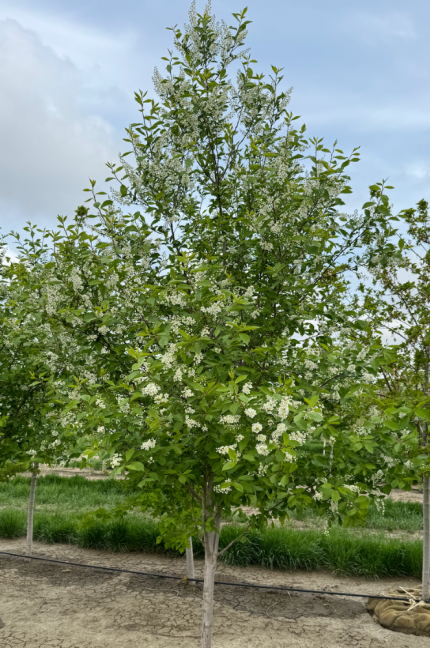
Bailey Select Sherbert Chokecherry
The Bailey Select Sherbert Chokecherry is a cultivated selection of the same chokecherry that grows wild in our region, with foliage that emerges green in spring and turns a rich purple by mid-summer. In spring, the tree produces a beautiful display of white, wonderfully fragrant panicles, followed by large crops of astringent black cherries that are mostly enjoyed by foraging birds. True to tradition, the fruit can also be used to make delicious chokecherry jam, just like in the old days.

Bur Oak
Bur Oaks are an exceptionally long lived tree that with time can reach truly massive proportions. They are an excellent selection for making a statement or as a shade tree with some authority. Bur Oaks are best suited for large open spaces. They are the most cold tolerant of all the oaks. When young, they are known to have a corky bark and branches. Their large acorns are prized by wildlife and are quickly carried off by birds and small mammals. When you plant a Bur Oak tree, you are really planting a tree for future generations.

Green Ash
The Green Ash is a time tested and true tree for the prairies. They are amongst the hardiest of trees for our region. The tree boasts glossy dark green leaves that are pinnately compound with five to nine large leaflets. Autumn turns these leaves a golden yellow. The tree has greyish brown bark with interlacing furrows and ridges that produce a distinctive diamond pattern. Green Ash are cold, drought and urban tolerant making them widely suitable for any application. Green ash are native to South Eastern Alberta and have have been planted in our parks and yards since the very beginning.

Laurel Leaf Willow
The Laurel Leaf Willow is an extremely hardy, large sized tree that is native to Northern Europe. It is noted for having a rounded form, dark green glossy leaves and twisted trunk bark. It produces catkins that are golden yellow in colour. The tree is normally allowed a low canopy and is perfectly content in wet sites. Laurel Leaf willows are very eager to leaf out in the spring and reuctant to drop their leaves in the fall.
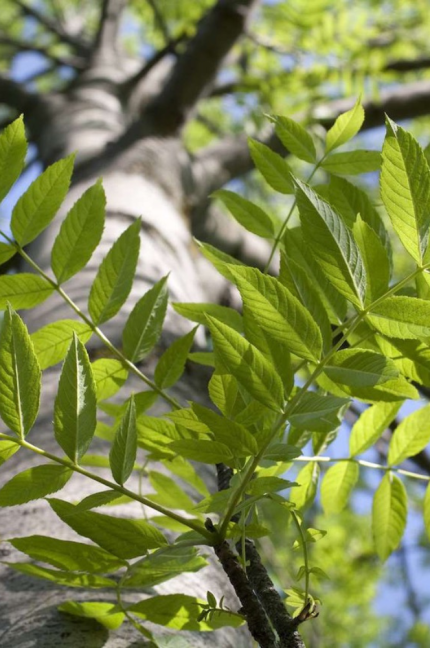
Nobility White Ash
The Nobility White Ash is a seedless selection of the American Ash with an excellent oval form and an orderly branch structure, noted for its well-mannered growth habits that require little pruning or training. With the right fall frosts, it develops deep purple fall color, and it is a very hardy tree that tolerates adverse urban planting conditions with minimal fuss.
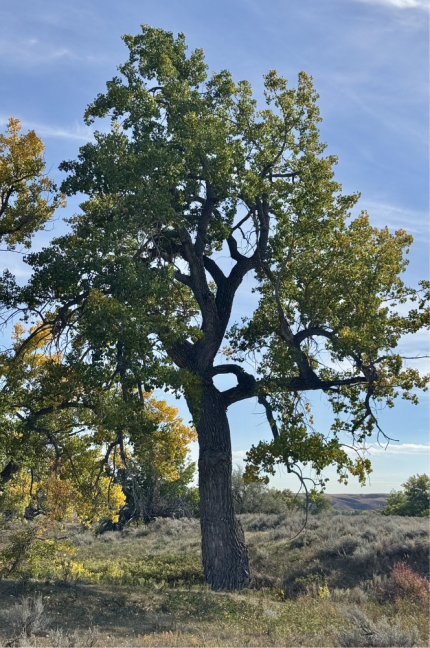
Sargent Poplar
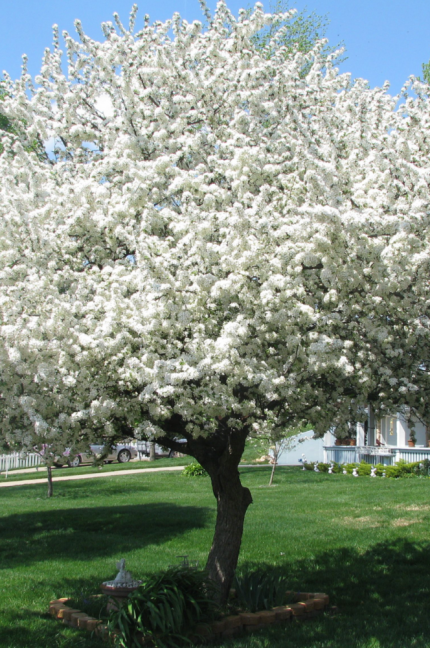
Spring Snow Crabapple
The Spring Snow Crabapple blooms in early to mid-spring with a profusion of beautiful, highly fragrant white flowers that make the tree look as though it has been covered in fresh snow. This compact tree is fully hardy for our region and, being a fruitless cultivar, remains clean and tidy throughout the season. It features distinctive orange-tinged bark and dark green, pointed leaves that turn yellow in fall, and when in bloom it is excellent for attracting hummingbirds and honey bees.
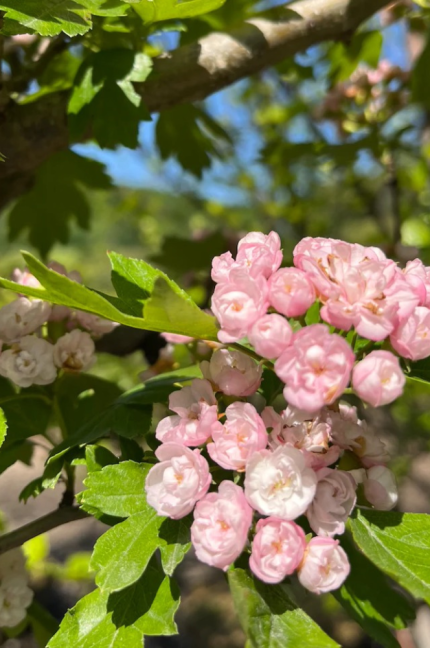
Toba Hawthorne
The Toba Hawthorne is hardy and compact ornamental tree that displays double white flowers that slowly turn to pink. The flowers are followed by small pomes that ripen to red in the fall. These pomes can be made into jellies or used in tea. The tree grows with bright glossy leaves that turn yellow. As the tree matures it develops a sinewy trunk full of furrows and twists.
