

Brandon Elm
The Brandon Elm is a selection of the native American Elm that grows on the eastern prairies. It was chosen for it’s consistent upright vase form, dense ascending branch structure and being considerably more compact. The leaves are dark green with a serrated margins and turn a golden yellow in the fall. The tree can be trained to have a raised lower branches which makes it suitable for locations with visibility and clearance concerns. Brandon Elms are hardy, drought and urban tolerant. The tree is highly versatile and widely planted for good reason.


| Common Name |
Brandon Elm |
|---|---|
| Latin Name |
Ulmus americana 'Brandon' |
| Form |
Vase Shaped |
| Life Span |
100+ |
| Growth Rate |
Fast when young and then moderate |
| Mature Height |
12m |
| Mature Spread |
7.5m |
| Flower Colour |
Inconspicuous |
| Fragrance |
Not significant |
| Fall Colour |
Yellow |
| Soil Preference |
Adaptable to All |
| Exposure Preference |
Full sun |
| Cold Hardiness Zone |
Zone 2a |
| Special Attributes and Considerations |
A notable feature of Brandon and American of Elms is that as the tree grows the base of the tree flares and forms buttresses like trees of the tropics. Dutch Elm Disease is a major concern with Brandon and American of Elms. Special considerations must made to help keep Alberta DED free. Only prune American Elm between October 1st and March 31st. The reason for this is beetle that spreads the fungus that causes DED is attracted to fresh wounds on Elm trees. |
| Folk Lore |
The Brandon Elm was selected by Lacombe Nurseries in central Alberta in around 1969. |
| Available Sizes |
40mm |
Related products

American Elm
American Elms are a large, long lived, stately tree. They are considered amongst the most beautiful and graceful trees that can be grown in the prairies. You will positively enjoy how their long slender branches gently sway in a breeze. Their leaves turn a golden yellow in the fall. American Elms are the trees that magnificently shade both North and South 1st Street in Medicine Hat with their cathedral-like ceiling of branches. They are exceptionally hardy and tolerant of even the most harsh planting site.

Box Elder
The Box Elder is a native tree that can often be found growing along streams and rivers. Some folks may know this tree as a Manitoba Maple. The tree is exceptionally drought and cold tolerant. A Box Elder can thrive in the most unforgiving location. Displaying plenty of character they often grow with gnarled and twisted branches. As the wood is weak and females will drop samaras, the Box Elder is best suited as a shade tree in a large yard or as a shelter belt tree in a rural setting.

Laurel Leaf Willow
The Laurel Leaf Willow is an extremely hardy, large sized tree that is native to Northern Europe. It is noted for having a rounded form, dark green glossy leaves and twisted trunk bark. It produces catkins that are golden yellow in colour. The tree is normally allowed a low canopy and is perfectly content in wet sites. Laurel Leaf willows are very eager to leaf out in the spring and reuctant to drop their leaves in the fall.

Mayday
The Mayday tree is a medium sized tree that produces beautiful five petalled white flowers clustered along short stalks know botanically as racemes. The tree is native to Northern Europe and has for a very long time been a part of our history. The best part of having a Mayday tree in your yard is they are by far the first species to bud out in the spring. You will often see flowers and leaves at the very beginning of May if not the end of April. After a long winter they are a true delight for both gardeners and hungry honey bees. They produce very small cherries that are readily eaten by birds. They are a very hardy tree and require little maintenance. At maturity they can grow to 10m tall, but we know of a specimen or two down on river side that would put that measurement to the test.
Nobility White Ash
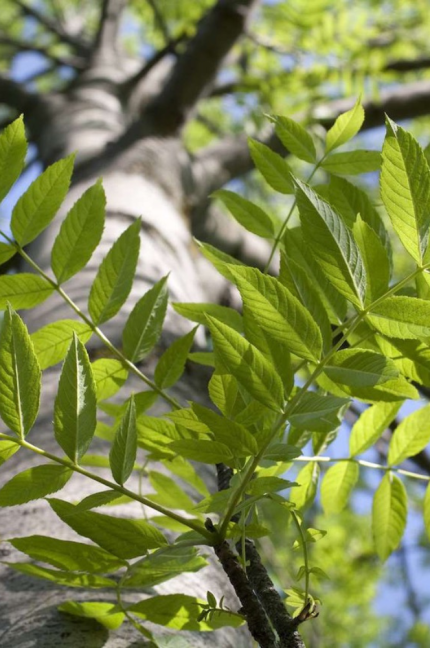
The Nobility White Ash is a seedless selection of the American Ash with an excellent oval form and an orderly branch structure, noted for its well-mannered growth habits that require little pruning or training. With the right fall frosts, it develops deep purple fall color, and it is a very hardy tree that tolerates adverse urban planting conditions with minimal fuss.
Prairie Dream Birch
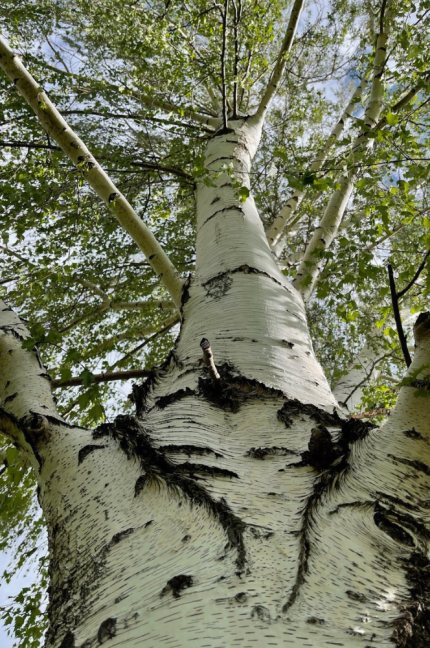
The Prairie Dream Birch is a paper birch with beautiful fair white bark and attractive green leaves. With time the bark on the lower trunk peels into neat little rolls that are a favourite for youngsters. The leaves are pointy and dark green with a doubly serrated margin. They turn a golden yellow in fall. This cultivar is low maintenance and more adaptable than other varieties of birch. The Prairie Dream Birch has demonstrated exceptional resilience to the the birch bark borer.
Sargent Poplar

Thunderchild Flowering Crab Apple
Thunderchild Flowering Crabapples are an attractive, compact and upright tree that make the perfect focal point for any garden. During middle spring, the branches are draped with clusters of vibrant pink flowers. Its fruit is perfectly edible and tends to remain on the tree long into winter. The tree displays a dark purple foliage throughout the growing season. Thunderchilds are strongly resistant of fire blight. They are an absolute delight for bees, butterflies and birds alike.
