

Showy Mountain Ash
The Showy Mountain Ash features showy white spring flowers, pinnately compound leaves and striking red fall fruit. The berries often remain on the tree after the leaves fall, which provides a pleasant winter appearance. The tree is excellent at attracting birds to any yard. The leaves are dark green and transition to orange / red in the fall. Bark is typically smooth and grey, becoming scaly as the tree matures. The tree is slow growing and compact, making it a perfect addition to smaller sites. The tree can be planted as an accent or shade tree.


| Common Name |
Showy Mountain Ash |
|---|---|
| Latin Name |
Sorbus decora |
| Form |
Oval |
| Life Span |
50+ |
| Growth Rate |
Slow |
| Mature Height |
7.5m |
| Mature Spread |
5.5m |
| Flower Colour |
White |
| Fragrance |
Lightly fragrant |
| Fall Colour |
orange |
| Soil Preference |
Widely adaptable |
| Exposure Preference |
Full sun ,Partial shade |
| Cold Hardiness Zone |
Zone 2 |
| Special Attributes and Considerations |
The fruit of a Showy Mountain Ash attract hungry birds and animals, but are too bitter / acidic to be eaten fresh off the tree. They can however, be made into jellies! |
| Folk Lore |
Contrary to its common name, it is not an Ash at all, but rather it is from the rose family. This tree is fondly know as a rowan tree in England. ,The botanical name quite literally means (showy fruit) in latin |
| Available Sizes |
40mm |
Related products

Brandon Elm
The Brandon Elm is a selection of the native American Elm that grows on the eastern prairies. It was chosen for it’s consistent upright vase form, dense ascending branch structure and being considerably more compact. The leaves are dark green with a serrated margins and turn a golden yellow in the fall. The tree can be trained to have a raised lower branches which makes it suitable for locations with visibility and clearance concerns. Brandon Elms are hardy, drought and urban tolerant. The tree is highly versatile and widely planted for good reason.

Evans Cherry
The Evans Cherry is hardy producer of an edible moderate sweetness cherry. The tree puts on a brilliant show of white flowers in the spring and then produces bright red fruit weighing 4.5g - 5.0g that ripens in mid August. The cultivar is self-pollinating, cold hardy and has a long history of growing in Alberta. The cherry can be eaten right off the tree once ripe, or used for making jams, jellies, pies, and even wines.

Muckle Plum
The Muckle Plum is hybrid between a Canadian Plum and Russian Almond. The tree explodes with a brilliant display of precocious pink flowers in early spring. The leaves are dark green and transition to a warm orange in the fall. The tree is very compact making it a perfect addition to smaller yards. Muckle plums will not grow any fruit so they considered to be very neat and tidy. The tree is cold hardy and makes a fine year around accent tree.
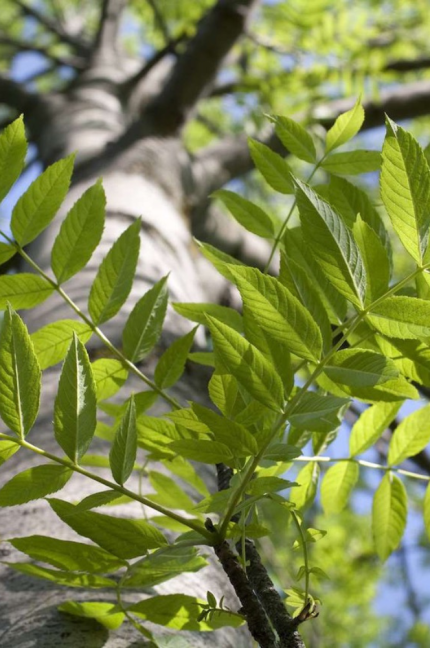
Nobility White Ash
The Nobility White Ash is a seedless selection of the American Ash with an excellent oval form and an orderly branch structure, noted for its well-mannered growth habits that require little pruning or training. With the right fall frosts, it develops deep purple fall color, and it is a very hardy tree that tolerates adverse urban planting conditions with minimal fuss.

Parkland Pillar Birch
The Parkland Pillar Birch is a beautiful tree that was derived from the Japanese White Birch. The tree grows with a commanding columnar form comprised of very dense dark green leaves. Typical of the birch species, it’s leaves are small, pointed and have serrated margins. The leaves turn to golden yellow in autumn and slowly shed, reviling it’s inner white bark. The Parkland Pillar Birch can be planted as a single accent tree, in a group or as a privacy screen.
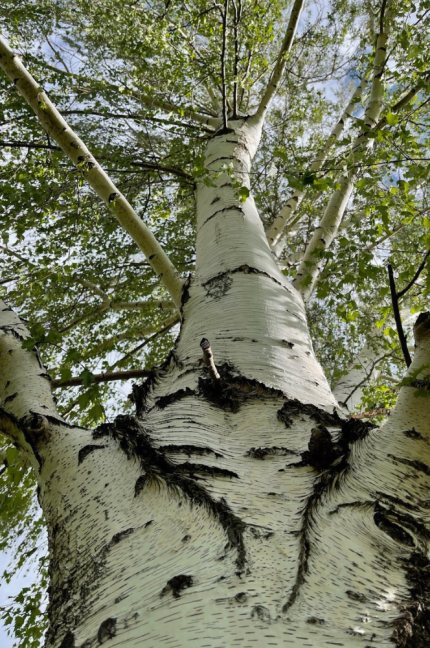
Prairie Dream Birch
The Prairie Dream Birch is a paper birch with beautiful fair white bark and attractive green leaves. With time the bark on the lower trunk peels into neat little rolls that are a favourite for youngsters. The leaves are pointy and dark green with a doubly serrated margin. They turn a golden yellow in fall. This cultivar is low maintenance and more adaptable than other varieties of birch. The Prairie Dream Birch has demonstrated exceptional resilience to the the birch bark borer.
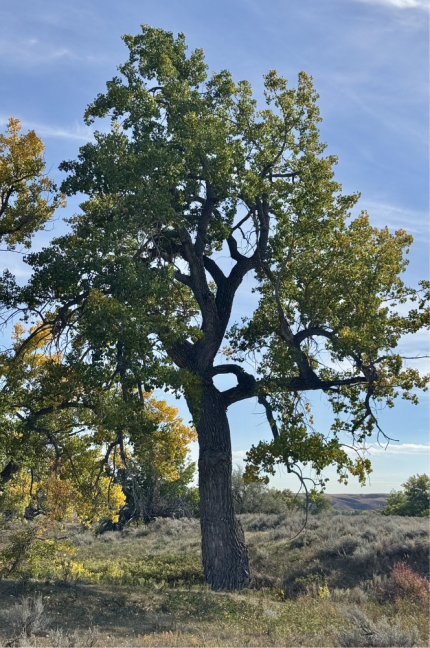
Sargent Poplar

True North American Linden
Bur Oaks are an exceptionally long lived tree that with time can reach truly massive proportions. They are an excellent selection for making a statement or as a shade tree with some authority. Bur Oaks are best suited for large open spaces. They are the most cold tolerant of all the oaks. When young, they are known to have a corky bark and branches. Their large acorns are prized by wildlife and are quickly carried off by birds and small mammals. When you plant a Bur Oak tree, you are really planting a tree for future generations.
