Littleleaf Linden

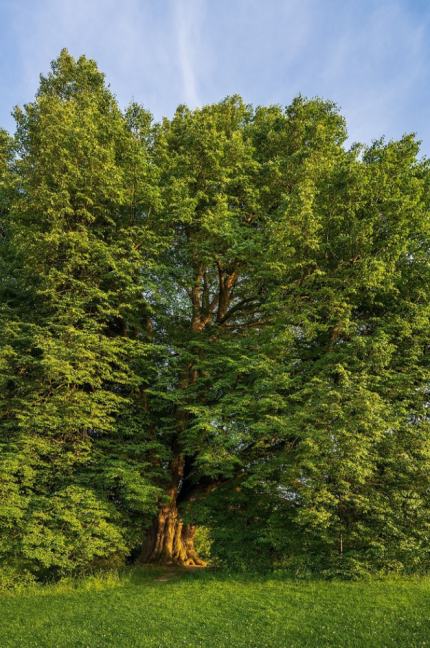
The Littleleaf Linden is a beautiful, highly ornamental tree that adds appeal to any outdoor space, growing with a strong central leader, dense branching, and a trunk that develops substantial girth over time. As its name suggests, its leaves are smaller than those of other linden species, heart shaped and dark green, and in early summer the tree bursts into bloom with clusters of exceptionally fragrant yellow flowers. These nectar-rich flowers attract hummingbirds, bees, and butterflies, and the species also produces a distinctive leaf-like structure called a bract, which evolved to protect the flowers and the small nutlets that develop and ripen in late summer.
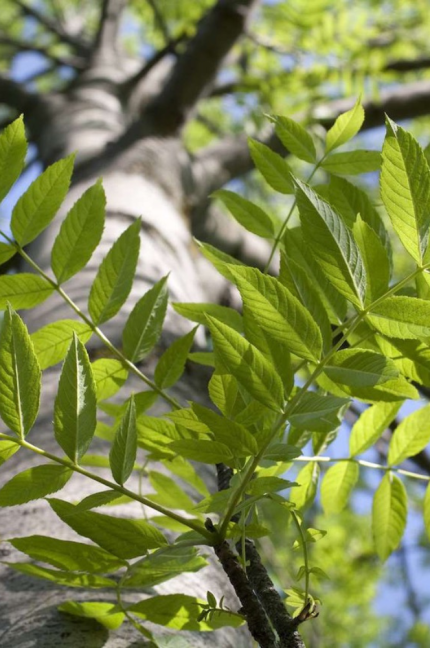
Nobility White Ash

The Nobility White Ash is a seedless selection of the American Ash with an excellent oval form and an orderly branch structure, noted for its well-mannered growth habits that require little pruning or training. With the right fall frosts, it develops deep purple fall color, and it is a very hardy tree that tolerates adverse urban planting conditions with minimal fuss.
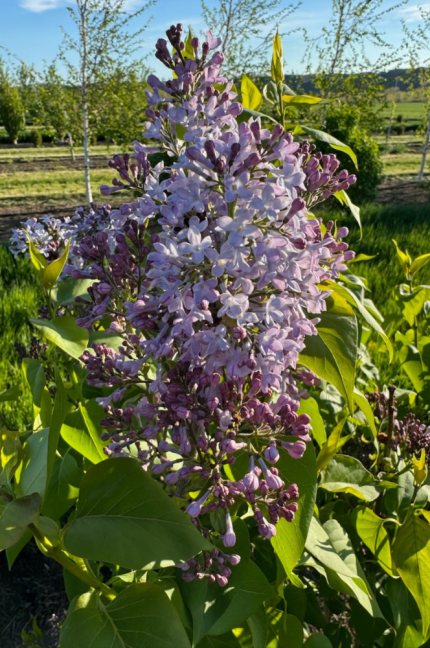
Common Purple Lilac
The Common Purple Lilac has for generations been cherished by gardeners for it’s fragrant purple blossoms and its ability to create a lush green wall. Technically a multi-stemmed shrub, this Lilac grows vigorously and flowers in late spring. Their conical clusters of florets have a tube-shaped base with four spreading petal lobes. The leaves are smooth, dark green, heart shaped and bud out prior to the flowers. The Common Purple Lilac is quite hardy, deer resistant and requires very little care. They are excellent for hedges along the border of a property line or as a windbreak but can also be planted as a single specimen.

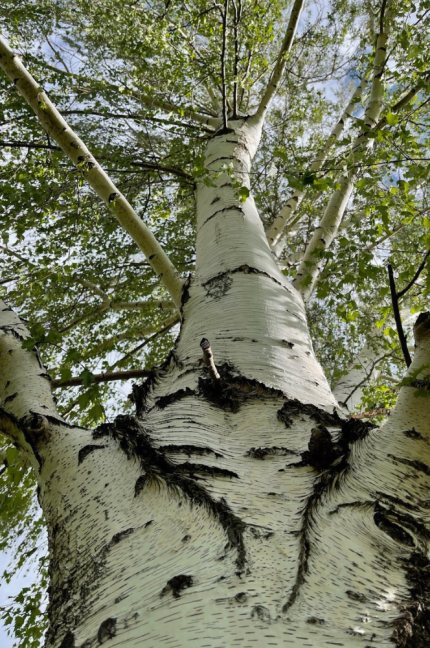
Prairie Dream Birch

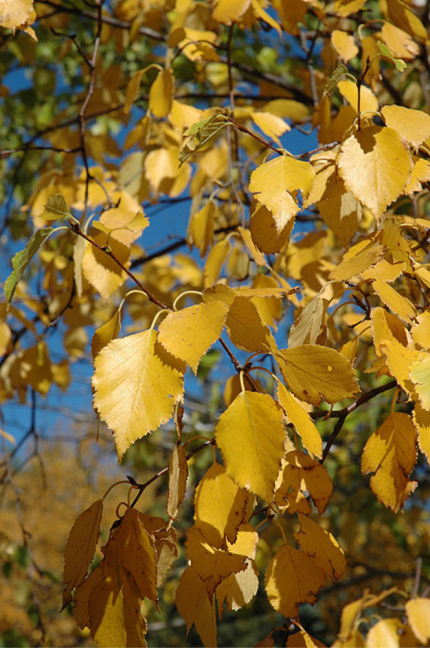
The Prairie Dream Birch is a paper birch with beautiful fair white bark and attractive green leaves. With time the bark on the lower trunk peels into neat little rolls that are a favourite for youngsters. The leaves are pointy and dark green with a doubly serrated margin. They turn a golden yellow in fall. This cultivar is low maintenance and more adaptable than other varieties of birch. The Prairie Dream Birch has demonstrated exceptional resilience to the the birch bark borer.
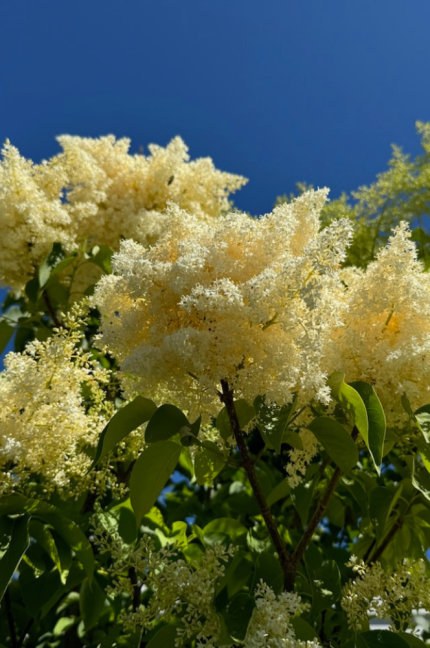
Ivory Silk Lilac Tree

The Ivory Silk Lilac Tree is a top contender for favourite ornamental trees. In late spring to early summer the tree displays long upright panicles of creamy white flowers. Some would say this lilac's fragrance is reminiscent of privet. The flowers transition to loose clusters of brown seed capsules that will persist into winter. The leaves are dark green and lanceolate shaped. The Ivory Silk grows with an attractive reddish brown bark. Fitting for smaller yards, the tree is petite in stature. The tree is reliably cold hardy and has very little pest issues.  

Top Gun Bur Oak

The Top Gun is cultivar of the Bur Oak with a smaller and morecolumnar form that grows with a strong central  leader. All Bur Oaks grows with a distinctive gnarled appearance. When young the bark of Top Gun tends to be much more silvery than the native selection. The underside of the leaves also tend to have a silvery / grey appearance. Their large acorns are prized by wildlife and are quickly carried off by birds and small mammals. When you plant a Top Gun Bur Oak tree, you are really planting a tree for future generations.

Snowbird Hawthorn
The Snowbird Hawthorn is hardy and compact ornamental tree that displays double white flowers. The flowers  are followed by small pomes that ripen to red in the fall. These pomes can be made into jellies or used in tea. The tree grows with bright glossy leaves that turn yellow. As the tree matures it develops a sinewy trunk full of furrows and twists.

Chickadee Birch

The Chickadee Birch is a beautiful tree that was derived from the Paper Birch. The tree adapts a tidy pyramidal form making it ideal for smaller spaces. The Chickadee Birch grows with dense dark green leaves. Typical of the birch species, these leaves are small, pointed and have serrated margins. The leaves turn to golden yellow in autumn and slowly shed, reviling it’s inner white bark. This cultivar has shown increased resilience to the bronze birch borer beetle.

Sargent Poplar

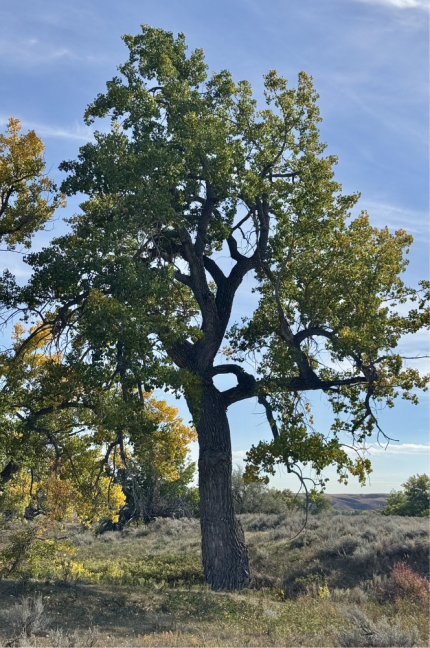
The majestic giant of the prairies. The Sargent Poplar is a native tree that commonly grows along rivers and streams. It’s leaves are glossy, bright green and triangular. The leaves are quick to turn to yellow in autumn. As the tree ages it will develop deeply furrowed bark with massive ridges and trapezoidal sides. The Sargent Poplar starts it’s life with an upright oval form and matures into a rounded form over the years. When young it is fast growing, making it a perfect selection for shelterbelts. The tree is widely adaptable and will thrive in even the most adverse of planting sites. The Sargent Poplar has the potential to grow into a massive organism, which make it best suited for larger planting sights.

Norway Spruce

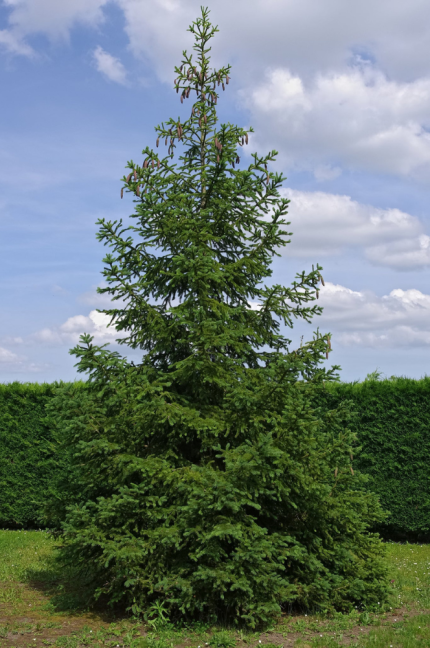
The Norway Spruce is a large coniferous tree that grows with dark green foliage, upswept branches and drooping branchlets. It’s cones are the largest of all the spruce trees and droop down below the branches like Christmas tree ornaments. The tree is quite fast growing when young and tends to slow with age. The trees needles are not nearly as spiny as a Blue Spruce. The tree is native to much of Europe but is very much at home on the prairies. The Norway Spruce is excellent for planting a stand alone specimen tree or in a shelterbelt.