

Parkland Pillar Birch
The Parkland Pillar Birch is a beautiful tree that was derived from the Japanese White Birch. The tree grows with a commanding columnar form comprised of very dense dark green leaves. Typical of the birch species, it’s leaves are small, pointed and have serrated margins. The leaves turn to golden yellow in autumn and slowly shed, reviling it’s inner white bark. The Parkland Pillar Birch can be planted as a single accent tree, in a group or as a privacy screen.


| Common Name |
Parkland Pillar Birch |
|---|---|
| Latin Name |
Betula platyphylla 'Jefpark' |
| Form |
Columnar |
| Life Span |
50+ |
| Growth Rate |
Fast |
| Mature Height |
7.5m |
| Mature Spread |
2m |
| Flower Colour |
Insignificant |
| Fragrance |
Insignificant |
| Fall Colour |
Golden ,Yellow |
| Soil Preference |
Moist and well drained |
| Exposure Preference |
Full sun ,Partial shade |
| Cold Hardiness Zone |
Zone 3a |
| Special Attributes and Considerations |
Has show some resistance to bronze birch borer. |
| Folk Lore |
The Parkland Pillar Birch is a section of Dakota Pinnacle Birch that was discovered by Mr. Dwayne Beck at Parkland Nurseries in Alberta in 2006. |
| Available Sizes |
40mm |
Related products

Box Elder
The Box Elder is a native tree that can often be found growing along streams and rivers. Some folks may know this tree as a Manitoba Maple. The tree is exceptionally drought and cold tolerant. A Box Elder can thrive in the most unforgiving location. Displaying plenty of character they often grow with gnarled and twisted branches. As the wood is weak and females will drop samaras, the Box Elder is best suited as a shade tree in a large yard or as a shelter belt tree in a rural setting.

Evans Cherry
The Evans Cherry is hardy producer of an edible moderate sweetness cherry. The tree puts on a brilliant show of white flowers in the spring and then produces bright red fruit weighing 4.5g - 5.0g that ripens in mid August. The cultivar is self-pollinating, cold hardy and has a long history of growing in Alberta. The cherry can be eaten right off the tree once ripe, or used for making jams, jellies, pies, and even wines.

Muckle Plum
The Muckle Plum is hybrid between a Canadian Plum and Russian Almond. The tree explodes with a brilliant display of precocious pink flowers in early spring. The leaves are dark green and transition to a warm orange in the fall. The tree is very compact making it a perfect addition to smaller yards. Muckle plums will not grow any fruit so they considered to be very neat and tidy. The tree is cold hardy and makes a fine year around accent tree.
Nobility White Ash
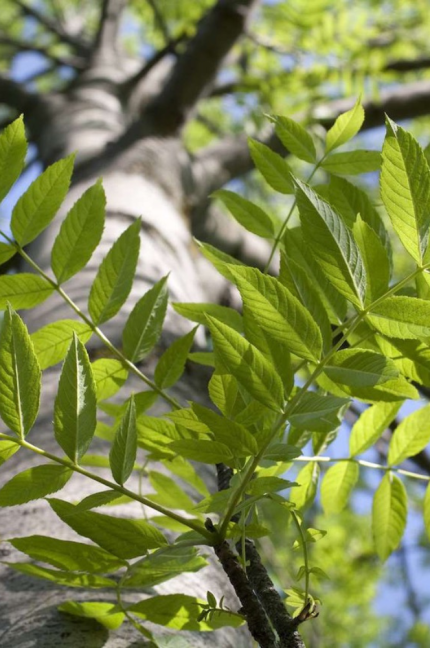
The Nobility White Ash is a seedless selection of the American Ash with an excellent oval form and an orderly branch structure, noted for its well-mannered growth habits that require little pruning or training. With the right fall frosts, it develops deep purple fall color, and it is a very hardy tree that tolerates adverse urban planting conditions with minimal fuss.

Pembina Plum
The Pembina Plum is hybrid between a Canadian and Japanese plum that was bred over 100 years ago. The tree shows a brilliant display of precocious white flowers in the spring and in late August offers an absolutely delicious plum. The fruit displays a dark red skin and yellow flesh. The fruit is of the clingstone variety, which simply describes how the flesh does not easily pull away from the pit. The tree is very cold hardy and makes a fine year around accent tree. It is indeed a glorious moment to walk over to your Pembina Plum and indulge in a sweet and juicy plum you grew right in your own back yard.

Princess Kay Plum
The Princess Kay Plum brings beauty to any yard it grows within. The tree explodes with a brilliant display of precocious double white flowers in early spring. The leaves are dark green and transition to yellow / red in the fall. The tree is very compact making it a perfect addition to smaller sites. Princess Kay Plums will only grow a tiny amount of fruit so they considered to be very neat and tidy. The tree is cold hardy and makes a fine year around accent tree.
Sargent Poplar

Thunderchild Flowering Crab Apple
Thunderchild Flowering Crabapples are an attractive, compact and upright tree that make the perfect focal point for any garden. During middle spring, the branches are draped with clusters of vibrant pink flowers. Its fruit is perfectly edible and tends to remain on the tree long into winter. The tree displays a dark purple foliage throughout the growing season. Thunderchilds are strongly resistant of fire blight. They are an absolute delight for bees, butterflies and birds alike.
