

Tatarian Maple
The Tatarian Maple is a compact, exceptionally hardy and low maintenance accent tree. The tree will display showy red samaras in late summer. Fall colours are vibrant, and leaves often remain on the tree well into winter. Interestingly, the tree will often grow wider than it is tall. The trees trunk is a striking light grey with black markings.

| Common Name |
Tatarian Maple |
|---|---|
| Latin Name |
Acer tataricum |
| Form |
Round |
| Life Span |
75+ |
| Growth Rate |
Medium |
| Mature Height |
7.5m |
| Mature Spread |
7.5m |
| Flower Colour |
White |
| Fragrance |
Insignificant |
| Fall Colour |
orange ,red ,Yellow |
| Soil Preference |
Widely adaptable |
| Exposure Preference |
Full sun ,Partial shade |
| Cold Hardiness Zone |
Zone 3a |
| Special Attributes and Considerations |
The Tatarian Maple is eye catching year around and should be planted in a prominent location where it can be admired by all whom pass it by. |
| Folk Lore |
The Tatarian Maple grows natively from South Eastern Europe, across Southern Russian and all the way East into Japan. The tree has long been naturalized in the Eastern United States. |
| Available Sizes |
50mm |
Related products

Fall Red Apple
The Fall Red Apple is an exceptionally cold hardy apple tree that will grow a delicious apple right in your own orchard. The apples are best eaten fresh off the tree or can be used in baking and juicing. On average apples measure 7 - 8cm across, have a dark red skin and white flesh. They are crisp and sweet (12.4 °Bx) with a pleasant flavor. We find that the apple has a some what traditional flavour which in the industry is referred to as being “moderately acidic”. As it’s name describes, apples are best harvested later on in the fall. The apples can be stored in your cold room for up to 90 days. The tree shows moderate resistance to fire blight. The tree tends towards alternate bearing.

Green Ash
The Green Ash is a time tested and true tree for the prairies. They are amongst the hardiest of trees for our region. The tree boasts glossy dark green leaves that are pinnately compound with five to nine large leaflets. Autumn turns these leaves a golden yellow. The tree has greyish brown bark with interlacing furrows and ridges that produce a distinctive diamond pattern. Green Ash are cold, drought and urban tolerant making them widely suitable for any application. Green ash are native to South Eastern Alberta and have have been planted in our parks and yards since the very beginning.

Laurel Leaf Willow
The Laurel Leaf Willow is an extremely hardy, large sized tree that is native to Northern Europe. It is noted for having a rounded form, dark green glossy leaves and twisted trunk bark. It produces catkins that are golden yellow in colour. The tree is normally allowed a low canopy and is perfectly content in wet sites. Laurel Leaf willows are very eager to leaf out in the spring and reuctant to drop their leaves in the fall.

Parkland Pillar Birch
The Parkland Pillar Birch is a beautiful tree that was derived from the Japanese White Birch. The tree grows with a commanding columnar form comprised of very dense dark green leaves. Typical of the birch species, it’s leaves are small, pointed and have serrated margins. The leaves turn to golden yellow in autumn and slowly shed, reviling it’s inner white bark. The Parkland Pillar Birch can be planted as a single accent tree, in a group or as a privacy screen.

Pembina Plum
The Pembina Plum is hybrid between a Canadian and Japanese plum that was bred over 100 years ago. The tree shows a brilliant display of precocious white flowers in the spring and in late August offers an absolutely delicious plum. The fruit displays a dark red skin and yellow flesh. The fruit is of the clingstone variety, which simply describes how the flesh does not easily pull away from the pit. The tree is very cold hardy and makes a fine year around accent tree. It is indeed a glorious moment to walk over to your Pembina Plum and indulge in a sweet and juicy plum you grew right in your own back yard.
Sargent Poplar

Silver Cloud Maple
The Silver Cloud Maple is a selection of the native species that is seedless, has superior cold hardiness and a more balanced branch structure. The tree is adorned with bright green 5 lobed maple leaves that shimmer in the wind with a silvery underside. This Maple also stands out due to it’s attractive silver bark. The tree is fast growing and drought tolerant. The Silver Cloud Maple is an excellent addition to any grounds with adequate space as a feature or shade tree.
Toba Hawthorne
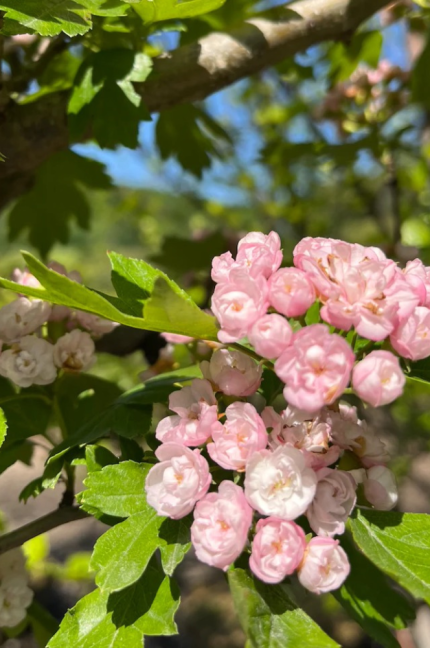
The Toba Hawthorne is hardy and compact ornamental tree that displays double white flowers that slowly turn to pink. The flowers are followed by small pomes that ripen to red in the fall. These pomes can be made into jellies or used in tea. The tree grows with bright glossy leaves that turn yellow. As the tree matures it develops a sinewy trunk full of furrows and twists.
