

Laurel Leaf Willow
The Laurel Leaf Willow is an extremely hardy, large sized tree that is native to Northern Europe. It is noted for having a rounded form, dark green glossy leaves and twisted trunk bark. It produces catkins that are golden yellow in colour. The tree is normally allowed a low canopy and is perfectly content in wet sites. Laurel Leaf willows are very eager to leaf out in the spring and reuctant to drop their leaves in the fall.


| Common Name |
Laurel Leaf Willow |
|---|---|
| Latin Name |
Salix Pentandra |
| Form |
Round |
| Life Span |
75+ |
| Growth Rate |
Fast |
| Mature Height |
14m |
| Mature Spread |
10m |
| Flower Colour |
Catkins ,Golden ,Yellow |
| Fragrance |
Insignificant |
| Fall Colour |
Golden ,Yellow |
| Soil Preference |
Widely adaptable |
| Exposure Preference |
Full sun |
| Cold Hardiness Zone |
Zone 3a |
| Special Attributes and Considerations |
All willow trees are known to be messy as they will shed small branches during wind storms. |
| Folk Lore |
The Laurel Leaf willow tree is named after the Bay Laurel tree due to the resemblance of their leaves. The Bay Laurel leaf is what we commonly use as a spice in soups and stews. In ancient Greek Mythology, the nymph Daphne’s prayers transformed her into a Bay Laurel tree to escape the lustful pursuits of Apollo. |
| Available Sizes |
40mm |
Related products

American Elm
American Elms are a large, long lived, stately tree. They are considered amongst the most beautiful and graceful trees that can be grown in the prairies. You will positively enjoy how their long slender branches gently sway in a breeze. Their leaves turn a golden yellow in the fall. American Elms are the trees that magnificently shade both North and South 1st Street in Medicine Hat with their cathedral-like ceiling of branches. They are exceptionally hardy and tolerant of even the most harsh planting site.

Box Elder
The Box Elder is a native tree that can often be found growing along streams and rivers. Some folks may know this tree as a Manitoba Maple. The tree is exceptionally drought and cold tolerant. A Box Elder can thrive in the most unforgiving location. Displaying plenty of character they often grow with gnarled and twisted branches. As the wood is weak and females will drop samaras, the Box Elder is best suited as a shade tree in a large yard or as a shelter belt tree in a rural setting.

Golden Willow
The Golden Willow is a hardy shelter belt tree that grows with a round form and slender drooping branches. The tree will grow to a large stature and tends to prefer a low canopy. As implied with it’s name, young stems are adorned with a beautiful yellow hue. The tree grows with glossy green, narrow (lanceolate) leaves. In autumn the leaves will turn golden yellow. As the tree ages the trunk’s bark will become deeply furrowed. The tree is typically found growing in a multi-trunk form, how ever we also have single trunk selections.

Green Ash
The Green Ash is a time tested and true tree for the prairies. They are amongst the hardiest of trees for our region. The tree boasts glossy dark green leaves that are pinnately compound with five to nine large leaflets. Autumn turns these leaves a golden yellow. The tree has greyish brown bark with interlacing furrows and ridges that produce a distinctive diamond pattern. Green Ash are cold, drought and urban tolerant making them widely suitable for any application. Green ash are native to South Eastern Alberta and have have been planted in our parks and yards since the very beginning.
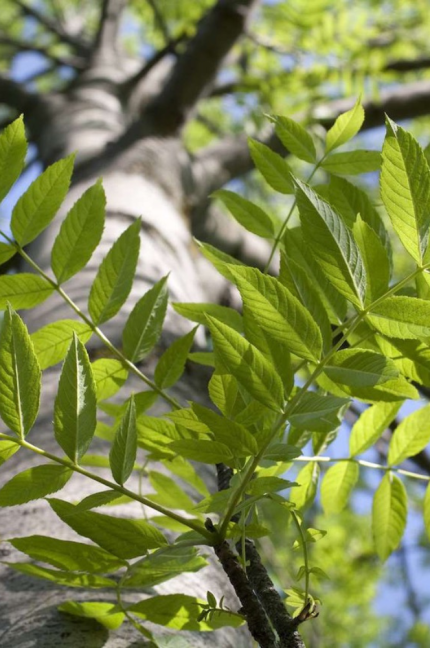
Nobility White Ash
The Nobility White Ash is a seedless selection of the American Ash with an excellent oval form and an orderly branch structure, noted for its well-mannered growth habits that require little pruning or training. With the right fall frosts, it develops deep purple fall color, and it is a very hardy tree that tolerates adverse urban planting conditions with minimal fuss.
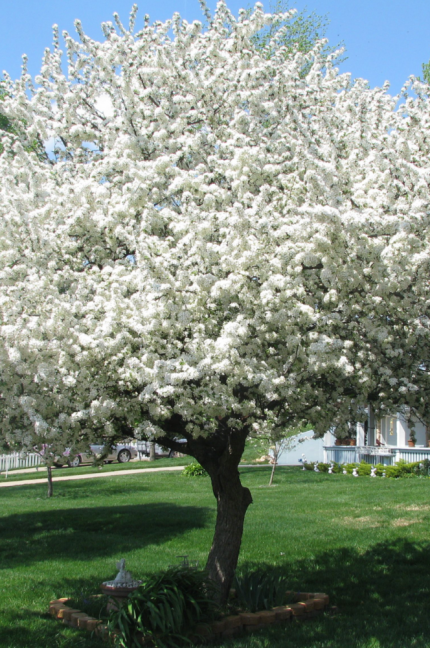
Spring Snow Crabapple
The Spring Snow Crabapple blooms in early to mid-spring with a profusion of beautiful, highly fragrant white flowers that make the tree look as though it has been covered in fresh snow. This compact tree is fully hardy for our region and, being a fruitless cultivar, remains clean and tidy throughout the season. It features distinctive orange-tinged bark and dark green, pointed leaves that turn yellow in fall, and when in bloom it is excellent for attracting hummingbirds and honey bees.

Thunderchild Flowering Crab Apple
Thunderchild Flowering Crabapples are an attractive, compact and upright tree that make the perfect focal point for any garden. During middle spring, the branches are draped with clusters of vibrant pink flowers. Its fruit is perfectly edible and tends to remain on the tree long into winter. The tree displays a dark purple foliage throughout the growing season. Thunderchilds are strongly resistant of fire blight. They are an absolute delight for bees, butterflies and birds alike.

True North American Linden
Bur Oaks are an exceptionally long lived tree that with time can reach truly massive proportions. They are an excellent selection for making a statement or as a shade tree with some authority. Bur Oaks are best suited for large open spaces. They are the most cold tolerant of all the oaks. When young, they are known to have a corky bark and branches. Their large acorns are prized by wildlife and are quickly carried off by birds and small mammals. When you plant a Bur Oak tree, you are really planting a tree for future generations.
