

Evans Cherry
The Evans Cherry is hardy producer of an edible moderate sweetness cherry. The tree puts on a brilliant show of white flowers in the spring and then produces bright red fruit weighing 4.5g – 5.0g that ripens in mid August. The cultivar is self-pollinating, cold hardy and has a long history of growing in Alberta. The cherry can be eaten right off the tree once ripe, or used for making jams, jellies, pies, and even wines.


| Common Name |
Evans Cherry |
|---|---|
| Latin Name |
Prunus 'Evans' |
| Form |
Round |
| Life Span |
45+ |
| Growth Rate |
Medium |
| Mature Height |
4.0m |
| Mature Spread |
3.0m |
| Flower Colour |
White |
| Fragrance |
Aromatic |
| Fall Colour |
orange |
| Soil Preference |
Widely adaptable |
| Exposure Preference |
Full sun |
| Cold Hardiness Zone |
Zone 3 |
| Special Attributes and Considerations |
As the tree is a copious producer of fruit it is best not planted near driveways or sidewalks. |
| Folk Lore |
Mrs. Borward had been growing exceptional cherry trees North East of Edmonton since 1923. In 1976 she was faced with loosing her beloved orchard to urban sprawl. To preserve her hard work she invited renowned horticulturalist Ieuan Evans to visit her orchard and take suckers of her cherry trees. Mr. Evans propagated those suckers and distributed them wide and far. Slowly but surely word spread of this amazing new cherry tree that would thrive on the prairies. |
| Available Sizes |
40mm |
Related products

Brandon Elm
The Brandon Elm is a selection of the native American Elm that grows on the eastern prairies. It was chosen for it’s consistent upright vase form, dense ascending branch structure and being considerably more compact. The leaves are dark green with a serrated margins and turn a golden yellow in the fall. The tree can be trained to have a raised lower branches which makes it suitable for locations with visibility and clearance concerns. Brandon Elms are hardy, drought and urban tolerant. The tree is highly versatile and widely planted for good reason.

Bur Oak
Bur Oaks are an exceptionally long lived tree that with time can reach truly massive proportions. They are an excellent selection for making a statement or as a shade tree with some authority. Bur Oaks are best suited for large open spaces. They are the most cold tolerant of all the oaks. When young, they are known to have a corky bark and branches. Their large acorns are prized by wildlife and are quickly carried off by birds and small mammals. When you plant a Bur Oak tree, you are really planting a tree for future generations.

Laurel Leaf Willow
The Laurel Leaf Willow is an extremely hardy, large sized tree that is native to Northern Europe. It is noted for having a rounded form, dark green glossy leaves and twisted trunk bark. It produces catkins that are golden yellow in colour. The tree is normally allowed a low canopy and is perfectly content in wet sites. Laurel Leaf willows are very eager to leaf out in the spring and reuctant to drop their leaves in the fall.
Littleleaf Linden
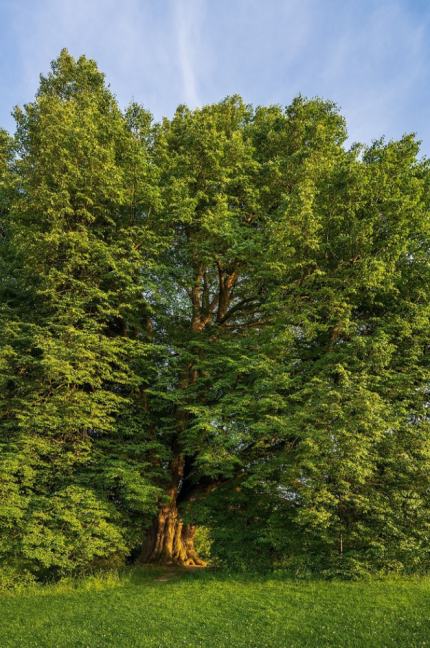
The Littleleaf Linden is a beautiful, highly ornamental tree that adds appeal to any outdoor space, growing with a strong central leader, dense branching, and a trunk that develops substantial girth over time. As its name suggests, its leaves are smaller than those of other linden species, heart shaped and dark green, and in early summer the tree bursts into bloom with clusters of exceptionally fragrant yellow flowers. These nectar-rich flowers attract hummingbirds, bees, and butterflies, and the species also produces a distinctive leaf-like structure called a bract, which evolved to protect the flowers and the small nutlets that develop and ripen in late summer.

Parkland Pillar Birch
The Parkland Pillar Birch is a beautiful tree that was derived from the Japanese White Birch. The tree grows with a commanding columnar form comprised of very dense dark green leaves. Typical of the birch species, it’s leaves are small, pointed and have serrated margins. The leaves turn to golden yellow in autumn and slowly shed, reviling it’s inner white bark. The Parkland Pillar Birch can be planted as a single accent tree, in a group or as a privacy screen.
Prairie Dream Birch
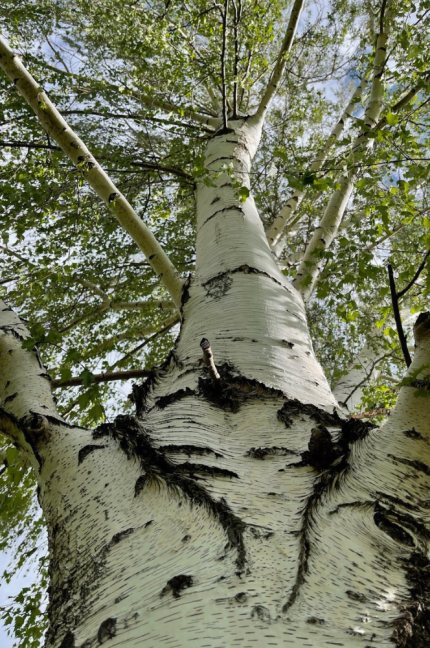
The Prairie Dream Birch is a paper birch with beautiful fair white bark and attractive green leaves. With time the bark on the lower trunk peels into neat little rolls that are a favourite for youngsters. The leaves are pointy and dark green with a doubly serrated margin. They turn a golden yellow in fall. This cultivar is low maintenance and more adaptable than other varieties of birch. The Prairie Dream Birch has demonstrated exceptional resilience to the the birch bark borer.

Thunderchild Flowering Crab Apple
Thunderchild Flowering Crabapples are an attractive, compact and upright tree that make the perfect focal point for any garden. During middle spring, the branches are draped with clusters of vibrant pink flowers. Its fruit is perfectly edible and tends to remain on the tree long into winter. The tree displays a dark purple foliage throughout the growing season. Thunderchilds are strongly resistant of fire blight. They are an absolute delight for bees, butterflies and birds alike.
Toba Hawthorne
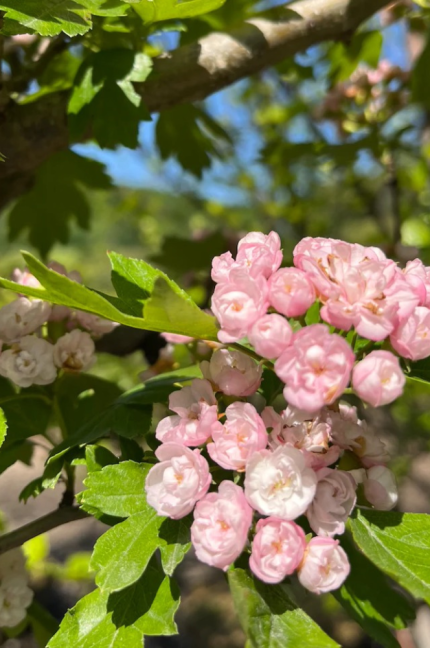
The Toba Hawthorne is hardy and compact ornamental tree that displays double white flowers that slowly turn to pink. The flowers are followed by small pomes that ripen to red in the fall. These pomes can be made into jellies or used in tea. The tree grows with bright glossy leaves that turn yellow. As the tree matures it develops a sinewy trunk full of furrows and twists.
