

Muckle Plum
The Muckle Plum is hybrid between a Canadian Plum and Russian Almond. The tree explodes with a brilliant display of precocious pink flowers in early spring. The leaves are dark green and transition to a warm orange in the fall. The tree is very compact making it a perfect addition to smaller yards. Muckle plums will not grow any fruit so they considered to be very neat and tidy. The tree is cold hardy and makes a fine year around accent tree.


| Common Name |
Muckle Plum |
|---|---|
| Latin Name |
Prunus x nigrella ‘Muckle' |
| Form |
Round |
| Life Span |
50+ |
| Growth Rate |
Slow |
| Mature Height |
4.5m |
| Mature Spread |
3.0m |
| Flower Colour |
Pink |
| Fragrance |
Lightly fragrant |
| Fall Colour |
orange |
| Soil Preference |
Moist and well drained, will not tolerate standing water. |
| Exposure Preference |
Full sun |
| Cold Hardiness Zone |
Zone 3a |
| Special Attributes and Considerations |
As the Muckle Plum is a super star, we recommend planting this tree is a prominent area where it can be admired by all. |
| Folk Lore |
In approximately 1956 the Muckle Plum was named by the Morden. Research Station in honour of the original breeder Mr. R. M. |
| Available Sizes |
30mm |
Related products

Bur Oak
Bur Oaks are an exceptionally long lived tree that with time can reach truly massive proportions. They are an excellent selection for making a statement or as a shade tree with some authority. Bur Oaks are best suited for large open spaces. They are the most cold tolerant of all the oaks. When young, they are known to have a corky bark and branches. Their large acorns are prized by wildlife and are quickly carried off by birds and small mammals. When you plant a Bur Oak tree, you are really planting a tree for future generations.

Fall Red Apple
The Fall Red Apple is an exceptionally cold hardy apple tree that will grow a delicious apple right in your own orchard. The apples are best eaten fresh off the tree or can be used in baking and juicing. On average apples measure 7 - 8cm across, have a dark red skin and white flesh. They are crisp and sweet (12.4 °Bx) with a pleasant flavor. We find that the apple has a some what traditional flavour which in the industry is referred to as being “moderately acidic”. As it’s name describes, apples are best harvested later on in the fall. The apples can be stored in your cold room for up to 90 days. The tree shows moderate resistance to fire blight. The tree tends towards alternate bearing.
Nobility White Ash
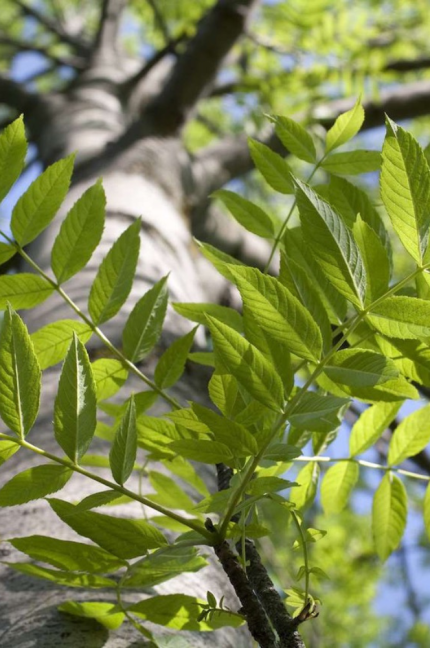
The Nobility White Ash is a seedless selection of the American Ash with an excellent oval form and an orderly branch structure, noted for its well-mannered growth habits that require little pruning or training. With the right fall frosts, it develops deep purple fall color, and it is a very hardy tree that tolerates adverse urban planting conditions with minimal fuss.

Parkland Pillar Birch
The Parkland Pillar Birch is a beautiful tree that was derived from the Japanese White Birch. The tree grows with a commanding columnar form comprised of very dense dark green leaves. Typical of the birch species, it’s leaves are small, pointed and have serrated margins. The leaves turn to golden yellow in autumn and slowly shed, reviling it’s inner white bark. The Parkland Pillar Birch can be planted as a single accent tree, in a group or as a privacy screen.
Sargent Poplar

Showy Mountain Ash
The Showy Mountain Ash features showy white spring flowers, pinnately compound leaves and striking red fall fruit. The berries often remain on the tree after the leaves fall, which provides a pleasant winter appearance. The tree is excellent at attracting birds to any yard. The leaves are dark green and transition to orange / red in the fall. Bark is typically smooth and grey, becoming scaly as the tree matures. The tree is slow growing and compact, making it a perfect addition to smaller sites. The tree can be planted as an accent or shade tree.
Toba Hawthorne
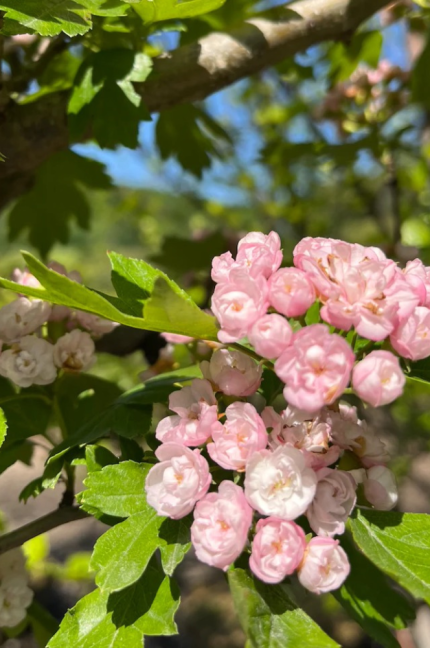
The Toba Hawthorne is hardy and compact ornamental tree that displays double white flowers that slowly turn to pink. The flowers are followed by small pomes that ripen to red in the fall. These pomes can be made into jellies or used in tea. The tree grows with bright glossy leaves that turn yellow. As the tree matures it develops a sinewy trunk full of furrows and twists.

True North American Linden
Bur Oaks are an exceptionally long lived tree that with time can reach truly massive proportions. They are an excellent selection for making a statement or as a shade tree with some authority. Bur Oaks are best suited for large open spaces. They are the most cold tolerant of all the oaks. When young, they are known to have a corky bark and branches. Their large acorns are prized by wildlife and are quickly carried off by birds and small mammals. When you plant a Bur Oak tree, you are really planting a tree for future generations.
