
American Elm
American Elms are a large, long lived, stately tree. They are considered amongst the most beautiful and graceful trees that can be grown in the prairies. You will positively enjoy how their long slender branches gently sway in a breeze. Their leaves turn a golden yellow in the fall. American Elms are the trees that magnificently shade both North and South 1st Street in Medicine Hat with their cathedral-like ceiling of branches. They are exceptionally hardy and tolerant of even the most harsh planting site.
Bailey Select Sherbert Chokecherry
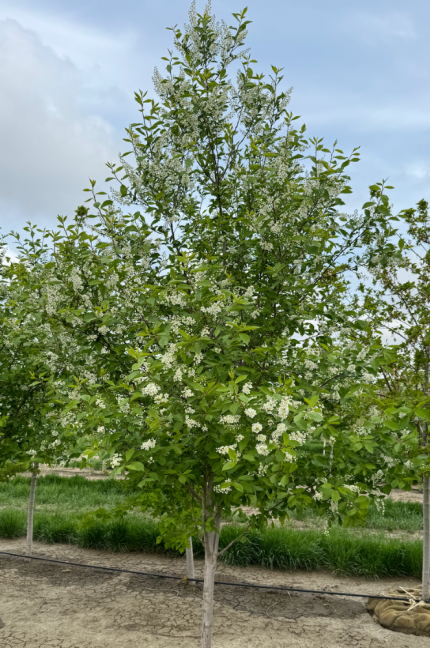
The Bailey Select Sherbert Chokecherry is a cultivated selection of the same chokecherry that grows wild in our region, with foliage that emerges green in spring and turns a rich purple by mid-summer. In spring, the tree produces a beautiful display of white, wonderfully fragrant panicles, followed by large crops of astringent black cherries that are mostly enjoyed by foraging birds. True to tradition, the fruit can also be used to make delicious chokecherry jam, just like in the old days.

Black Walnut
Black Walnut Trees are a relatively rare tree for Southern Alberta but they have long been successfully grown in Medicine Hat. They make excellent shade trees and offer a splendid dappled shade with their loose open canopy. As a delicious autumn treat they produce large bounties of rich tasting nuts. They are low maintenance and exceptionally pest and disease resilient. They produce a brilliant fall show of bright yellow leaves. All and all we can not say enough good things about the Black Walnut tree as a consideration for anyones yard with appropriate space.

Box Elder
The Box Elder is a native tree that can often be found growing along streams and rivers. Some folks may know this tree as a Manitoba Maple. The tree is exceptionally drought and cold tolerant. A Box Elder can thrive in the most unforgiving location. Displaying plenty of character they often grow with gnarled and twisted branches. As the wood is weak and females will drop samaras, the Box Elder is best suited as a shade tree in a large yard or as a shelter belt tree in a rural setting.

Brandon Elm
The Brandon Elm is a selection of the native American Elm that grows on the eastern prairies. It was chosen for it’s consistent upright vase form, dense ascending branch structure and being considerably more compact. The leaves are dark green with a serrated margins and turn a golden yellow in the fall. The tree can be trained to have a raised lower branches which makes it suitable for locations with visibility and clearance concerns. Brandon Elms are hardy, drought and urban tolerant. The tree is highly versatile and widely planted for good reason.

Bur Oak
Bur Oaks are an exceptionally long lived tree that with time can reach truly massive proportions. They are an excellent selection for making a statement or as a shade tree with some authority. Bur Oaks are best suited for large open spaces. They are the most cold tolerant of all the oaks. When young, they are known to have a corky bark and branches. Their large acorns are prized by wildlife and are quickly carried off by birds and small mammals. When you plant a Bur Oak tree, you are really planting a tree for future generations.
Chickadee Birch

Colorado Blue Spruce
The Colorado Blue Spruce is an exceptionally hardy conical shaped evergreen with densely growing horizontal branches and stiff short needles. The tree can range in colour from green to silvery blue simply due to genetic variation. They require no maintenance, are deer resistant and drought tolerant. Colorado Blue Spruce are an excellent choice for taming the wind and year round privacy. They are the most common and reliable evergreen planted in the region.
Common Purple Lilac

Dropmore Linden
The Dropmore Linden is hybrid between the native American Linden and the European Little Leaf Linden. This breeding resulted in a regal tree fit to grow in the most discerning grounds. The tree grows with a strong central leader and a trunk with substantial girth. Leaves are densely growing, dark green and heart shaped. In early summer the tree will burst into colour with clusters of exceptionally fragrant yellow flowers. The tree is an excellent source of nectar for honey bees. The tree has a long history of being the most prairie hardy Linden and is to be considered a low maintenance selection.

Evans Cherry
The Evans Cherry is hardy producer of an edible moderate sweetness cherry. The tree puts on a brilliant show of white flowers in the spring and then produces bright red fruit weighing 4.5g - 5.0g that ripens in mid August. The cultivar is self-pollinating, cold hardy and has a long history of growing in Alberta. The cherry can be eaten right off the tree once ripe, or used for making jams, jellies, pies, and even wines.

Fall Red Apple
The Fall Red Apple is an exceptionally cold hardy apple tree that will grow a delicious apple right in your own orchard. The apples are best eaten fresh off the tree or can be used in baking and juicing. On average apples measure 7 - 8cm across, have a dark red skin and white flesh. They are crisp and sweet (12.4 °Bx) with a pleasant flavor. We find that the apple has a some what traditional flavour which in the industry is referred to as being “moderately acidic”. As it’s name describes, apples are best harvested later on in the fall. The apples can be stored in your cold room for up to 90 days. The tree shows moderate resistance to fire blight. The tree tends towards alternate bearing.

Golden Willow
The Golden Willow is a hardy shelter belt tree that grows with a round form and slender drooping branches. The tree will grow to a large stature and tends to prefer a low canopy. As implied with it’s name, young stems are adorned with a beautiful yellow hue. The tree grows with glossy green, narrow (lanceolate) leaves. In autumn the leaves will turn golden yellow. As the tree ages the trunk’s bark will become deeply furrowed. The tree is typically found growing in a multi-trunk form, how ever we also have single trunk selections.

Green Ash
The Green Ash is a time tested and true tree for the prairies. They are amongst the hardiest of trees for our region. The tree boasts glossy dark green leaves that are pinnately compound with five to nine large leaflets. Autumn turns these leaves a golden yellow. The tree has greyish brown bark with interlacing furrows and ridges that produce a distinctive diamond pattern. Green Ash are cold, drought and urban tolerant making them widely suitable for any application. Green ash are native to South Eastern Alberta and have have been planted in our parks and yards since the very beginning.
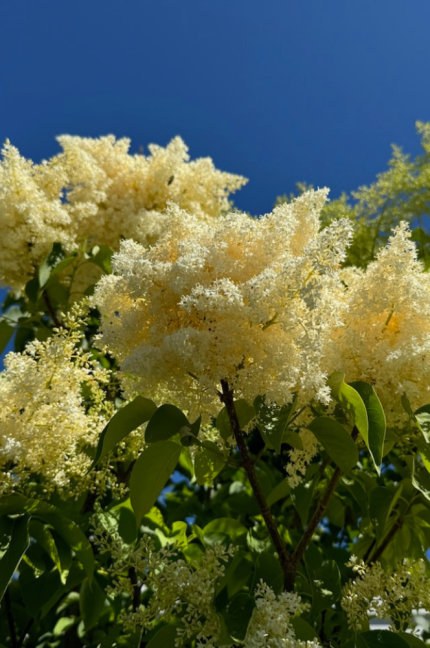
Ivory Silk Lilac Tree

Laurel Leaf Willow
The Laurel Leaf Willow is an extremely hardy, large sized tree that is native to Northern Europe. It is noted for having a rounded form, dark green glossy leaves and twisted trunk bark. It produces catkins that are golden yellow in colour. The tree is normally allowed a low canopy and is perfectly content in wet sites. Laurel Leaf willows are very eager to leaf out in the spring and reuctant to drop their leaves in the fall.
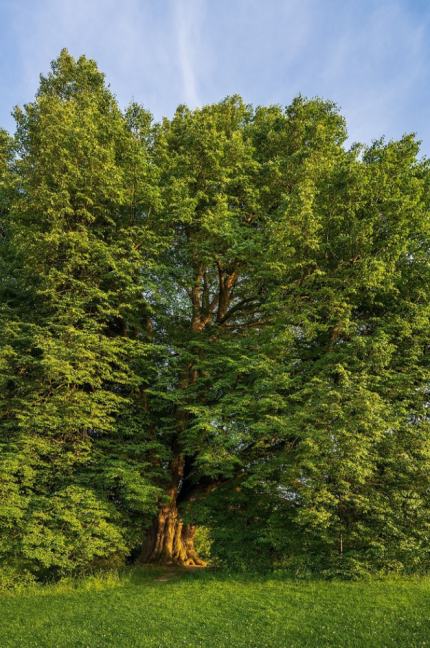
Littleleaf Linden
The Littleleaf Linden is a beautiful, highly ornamental tree that adds appeal to any outdoor space, growing with a strong central leader, dense branching, and a trunk that develops substantial girth over time. As its name suggests, its leaves are smaller than those of other linden species, heart shaped and dark green, and in early summer the tree bursts into bloom with clusters of exceptionally fragrant yellow flowers. These nectar-rich flowers attract hummingbirds, bees, and butterflies, and the species also produces a distinctive leaf-like structure called a bract, which evolved to protect the flowers and the small nutlets that develop and ripen in late summer.

Mayday
The Mayday tree is a medium sized tree that produces beautiful five petalled white flowers clustered along short stalks know botanically as racemes. The tree is native to Northern Europe and has for a very long time been a part of our history. The best part of having a Mayday tree in your yard is they are by far the first species to bud out in the spring. You will often see flowers and leaves at the very beginning of May if not the end of April. After a long winter they are a true delight for both gardeners and hungry honey bees. They produce very small cherries that are readily eaten by birds. They are a very hardy tree and require little maintenance. At maturity they can grow to 10m tall, but we know of a specimen or two down on river side that would put that measurement to the test.

Muckle Plum
The Muckle Plum is hybrid between a Canadian Plum and Russian Almond. The tree explodes with a brilliant display of precocious pink flowers in early spring. The leaves are dark green and transition to a warm orange in the fall. The tree is very compact making it a perfect addition to smaller yards. Muckle plums will not grow any fruit so they considered to be very neat and tidy. The tree is cold hardy and makes a fine year around accent tree.
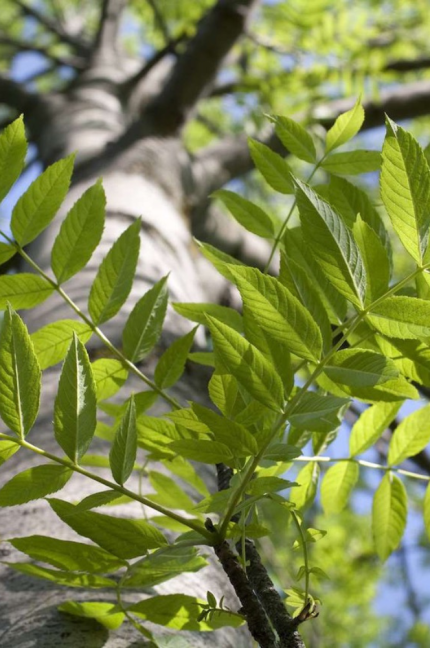
Nobility White Ash
The Nobility White Ash is a seedless selection of the American Ash with an excellent oval form and an orderly branch structure, noted for its well-mannered growth habits that require little pruning or training. With the right fall frosts, it develops deep purple fall color, and it is a very hardy tree that tolerates adverse urban planting conditions with minimal fuss.

Northern Acclaim Thornless
The Northern Acclaim Thornless Honey Locust is the hardiest of all honey locust cultivars. The tree features a stunning growth habit with horizontally tiered branches. It gives the first impression of being exotic looking for our region. The tree is considered to be drought and urban tolerant. It displays bright green foliage that changes to a golden yellow in the fall. The leaves are small and fern like (Pinnately and bi-pinnately compound) that offer a dappled shade to happy lawns below.
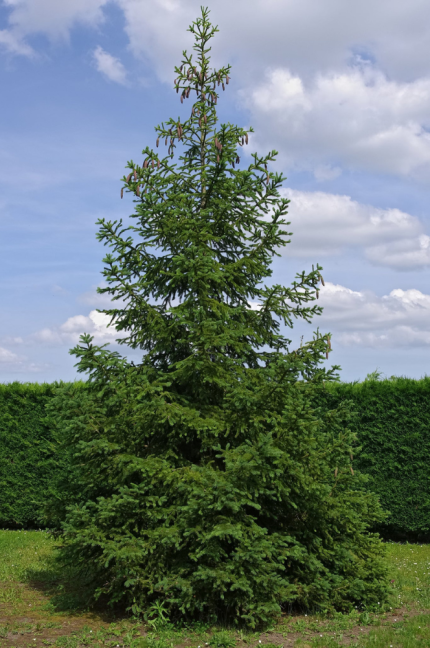
Norway Spruce

Ohio Buckeye
The Ohio Buckeye tree is an exotic looking medium sized tree that produces long bouquets of beautiful little flower clusters. They have very dense foliage that is early to leaf out. They are exceptionally cold hardy and require little maintenance. They have a slightly foul oniony odour when their foliage is crushed so the deer thankfully leave them alone! These trees are prolific produces of nuts which may annoy our more prim and proper tree owners. This messy quality can easily be mitigated by planing the tree with a mulched bed around the trunk which will simply welcome and absorb the fallen nuts.

Parkland Pillar Birch
The Parkland Pillar Birch is a beautiful tree that was derived from the Japanese White Birch. The tree grows with a commanding columnar form comprised of very dense dark green leaves. Typical of the birch species, it’s leaves are small, pointed and have serrated margins. The leaves turn to golden yellow in autumn and slowly shed, reviling it’s inner white bark. The Parkland Pillar Birch can be planted as a single accent tree, in a group or as a privacy screen.
